
Calories Digested
lets talk energy: What fuels your body and why it matters
Ever wonder what powers your brain on a Monday morning? Or why you hit that infamous post-lunch slump? Spoiler alert: it’s not magic or caffeine (well, not just caffeine)… it’s energy.
But we’re not talking about “good vibes” energy. We’re talking about the real, biological kind; the kind your body pulls from food and turns into fuel for everything from blinking to bench pressing.
Let’s dive into the science of energy… in a way that’s part life hack, part nutrition 101, and fully digestible (pun intended).
What Is Energy, Exactly?
Energy is the fuel your body runs on. Just like a car needs petrol or electricity to move, your body needs energy to function; whether you’re powering through a workout or doing absolutely nothing on the sofa.
We get this energy from food, and it’s measured in:
- Kilojoules (kJ) – the metric unit of energy
- Kilocalories (kcal) – often just called calories
When you see those numbers on food labels, you’re looking at how much energy that food provides; basically, how much fuel it gives your body. (1)

How much energy do we actually need?
Here in the UK, nutrition experts use something called the Estimated Average Requirement (EAR). This is the average amount of energy needed per day to maintain health and weight in a moderately active adult.
Here’s the standard breakdown (2):
- Adult men (19–64 years): 2,500 kcal/day
- Adult women (19–64 years): 2,000 kcal/day
But real life is messier than averages.
Your energy needs vary based on:
- Your age
- Your sex
- Your body size
- Your activity level
- Your health goals (e.g. weight loss, muscle gain, recovery from illness) (3) (4)
These recommendations also assume a fairly sedentary lifestyle, which, let’s face it, is common (think desk job + Netflix + car commutes). That means some people will need less than the EAR, and others more, especially if you’re regularly active or have specific goals in mind. (5) (6)
For personalised advice, especially if you’re working towards weight-related or medical goals, it’s worth speaking to a healthcare professional or registered dietitian… using myfood24!
The energy Balancing act: CAlories in vs calories out
Let’s talk energy balance, basically your body’s budget
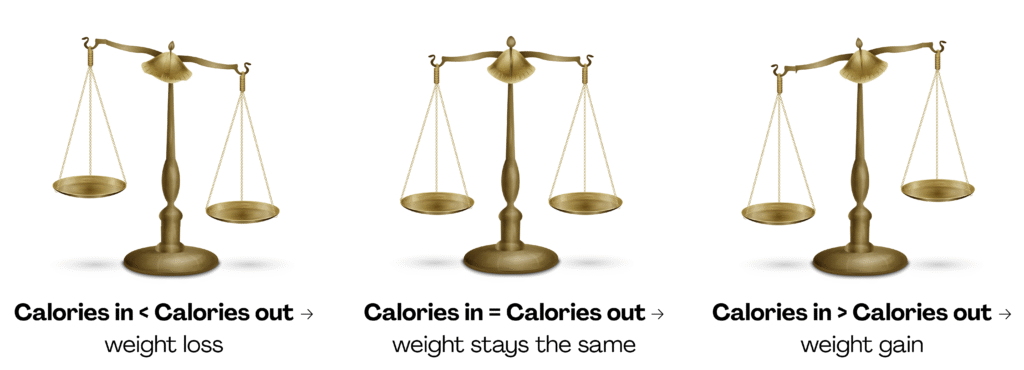
Your body uses energy even when you’re doing nothing at all, just keeping your heart beating, lungs breathing, and brain ticking requires calories. Add in walking, working, exercising, or even thinking hard, and your energy needs climb even higher.
This is why managing energy intake and output through what you eat and how active you are is key to maintaining a healthy weight and supporting overall wellbeing. (7)
Cutting calories can seem like the fast track to weight loss, but eating too little can actually do more harm than good. If you’re in a calorie deficit, make sure it’s a safe one, generally no more than about 300-500 calories below your maintenance level. Your body still needs fuel to function, even if you’re trying to slim down! (8) (9) (10)
What foods give us energy?
Short answer? All of them.
But not all foods provide the same quality of energy… and that’s where things get interesting.
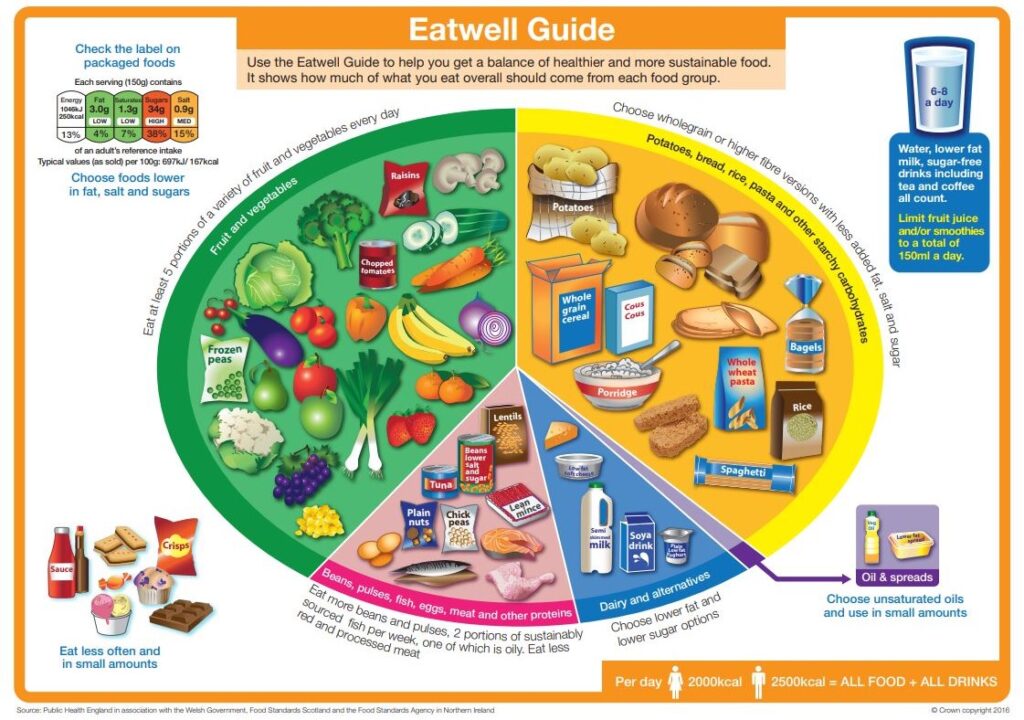
Here’s how to fuel your body smartly, based on the UK’s Eatwell Guide. (11)
1. Fruits and vegetables – nature’s multivitamins
- Should make up a third of your daily diet
- Aim for at least 5 portions a day
- Includes fresh, frozen, canned, dried, and even juiced options
- Packed with vitamins, minerals, and fibre
2. Starchy carbohydrates – your body’s primary energy source
- Another third of your daily intake should come from these
- Think: bread, pasta, rice, potatoes, oats
- Opt for wholegrain or higher fibre versions where possible
- They provide longer-lasting energy and support gut health
Check our Carbohydrate blog for more information

3. Protein-rich foods – for repair, growth and maintenance
- Includes fish, lean meats, beans, lentils, eggs, tofu, dairy
- Crucial for building and repairing muscles, tissues, and enzymes
- Beans and lentils = lower in fat, higher in fibre
- Oily fish (like salmon or mackerel) is rich in omega-3s, which support heart and brain health
Don’t forget dairy! It’s a protein source too; aim for low-fat, low-sugar options when you can.
Explore protein-rich foods in our protein blog
4. Fats – the most energy-dense nutrient
- Fats give you more calories per gram than protein or carbs
- But not all fats are equal:
Unsaturated fats (olive oil, avocado, nuts) → healthier
Saturated fats (butter, lard, processed meats) → limit intake
Even healthy fats are calorie dense, so portion size matters. The same goes for sugary snacks, chocolate, cakes, and fizzy drinks — fine occasionally, but not your everyday go to.
More on fats in our fats blog!
The bottom line: Energy is life
Energy isn’t just a number; it’s the lifeblood of everything you do, from thinking to sleeping to hitting the gym.
Here is your science-baked action plan:
- Eat a variety of nutrient-dense foods from all food groups
- Find your personal energy balance
- Respect your body’s changing needs — with age, activity, and goals
- Don’t fear calories; use them intentionally, not obsessively
Because when it comes to energy, it’s not just about how much you get.
It’s about where it comes from, how well it serves you, and how you use it.
Myfood24
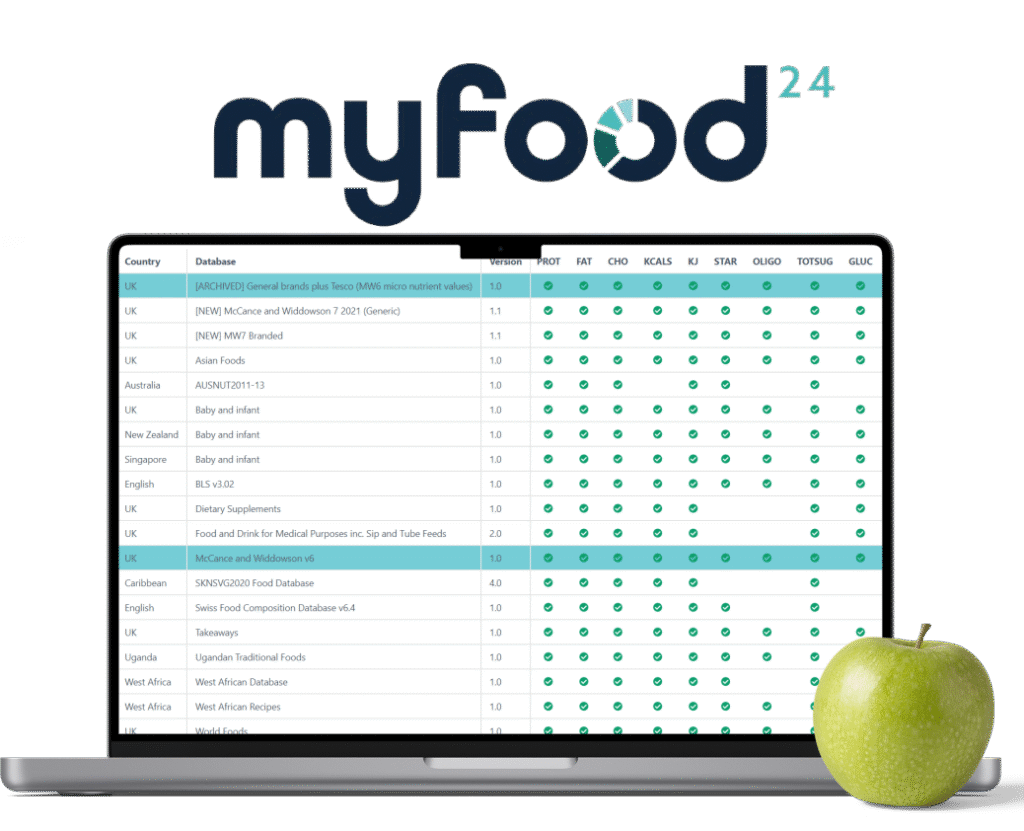
Our databases make it easy to analyse your nutrient intake including how many calories (kcal) you’re consuming, and which foods contribute most. You can track your intake against daily recommendations and identify where changes might be helpful.
In the UK, our healthcare platform offers valuable insights for health professionals to support their patients and clients in managing salt intake and improving overall diet quality. Our research and teaching platforms are available in the UK and internationally, with access to 30 global food datasets in 9 languages — each offering a detailed breakdown of calories and other nutrients.
You can find out more about how you can use myfood24 by trying our free demo or get in touch.
References
- National Health Service, 2023. Understanding Calories. Available at: Understanding calories – NHS
- Public Health England, 2016, Government Dietary Recommendations. Available via: Main heading
- Science, 2021. Daily Energy Expenditure Through the Human Life Course. Available at: Daily energy expenditure through the human life course | Science
- Pubmed, 2010. Associations Between Energy Demands, Physical Activity, and Body Composition in Adult Humans between 18 and 96y of age. Available at: Associations between energy demands, physical activity, and body composition in adult humans between 18 and 96 y of age – PubMed
- Journal of Advanced Nursing, 2020. The Factors Related to a Sedentary Lifestyle: A meta-analysis review. Available at: The factors related to a sedentary lifestyle: A meta‐analysis review – Martins – 2021 – Journal of Advanced Nursing – Wiley Online Library
- International Journal of Modern Agriculture, 2021. Nutritional Status and Sedentary Lifestyle of Individuals A review. Available at: Nutritional Status and Sedentary Lifestyle of Individuals A review | International Journal of Modern Agriculture
- Nutrients, 2021. What Is the Impact of Energy Expenditure on Energy Intake? Available at: What Is the Impact of Energy Expenditure on Energy Intake?
- AHA Journals, 2012. Energy Balance and Obesity. Available at: Energy Balance and Obesity | Circulation
- Proceedings of the Nutrition Society, 2021. Dynamic Changes in Energy Expenditure in Response to Underfeeding: A Review. Available at: Dynamic changes in energy expenditure in response to underfeeding: a review | Proceedings of the Nutrition Society | Cambridge Core
- Nutrients, 2022. Nutrition Concepts for the Treatment of Obesity in Adults. Available at: Nutrition Concepts for the Treatment of Obesity in Adults
- National Health Service, 2022. The Eat Well Guide. Available at: The Eatwell Guide – NHS
Author: Jessica Eardley-Thompson, ANutr Nutritionist
Editor: Lucy Clarkson, SENr Nutritionist & Grace Williams, Head of Nutrition and Operations